Babies are often easier to fly with than toddlers. They sleep a lot, they cannot run down the aisle and they fit on a lap. What makes a flight hard is usually the planning around it: the wrong seat, a bottle stuck at security, a nap that falls in the queue for boarding. Most of that can be fixed before you leave home.
Lap seat or a seat of their own
Many airlines let a baby under two travel on an adult's lap, often for a reduced fare or a fee on international routes. It is cheaper, and on a short flight it is often fine. On a long flight, a seat of their own gives the baby somewhere to sleep and gives you your arms back.
Rules differ between airlines and between countries, and they change. Check the age limits, what a lap infant pays, whether you may bring an extra bag for the baby and how many babies can sit in one row. Each row has a limited number of spare oxygen masks, so two adults with two lap babies may be split up.
On long-haul flights, ask about a bassinet. These clip to the wall in front of certain rows, usually the bulkhead, and have weight and length limits. There are only a few on each plane, so request one when you book and confirm it again before you fly.
Car seats on the plane
If you buy a seat for the baby, you can often use your own car seat in it, as long as it carries a label showing it is approved for aircraft use and it fits the airline seat. A rear-facing seat in a narrow row can be a squeeze, so the window seat is usually the one the airline will ask you to use. Check the airline's own rules before you assume your seat will be accepted.
If you are hiring a car at the other end, you will need a car seat there too. Bringing your own means you know it and know how to fit it. Many airlines carry car seats and strollers free, either at check-in or at the aircraft door. Pack the car seat in a bag to keep it clean, and accept that it may arrive scuffed.
Getting through security with milk
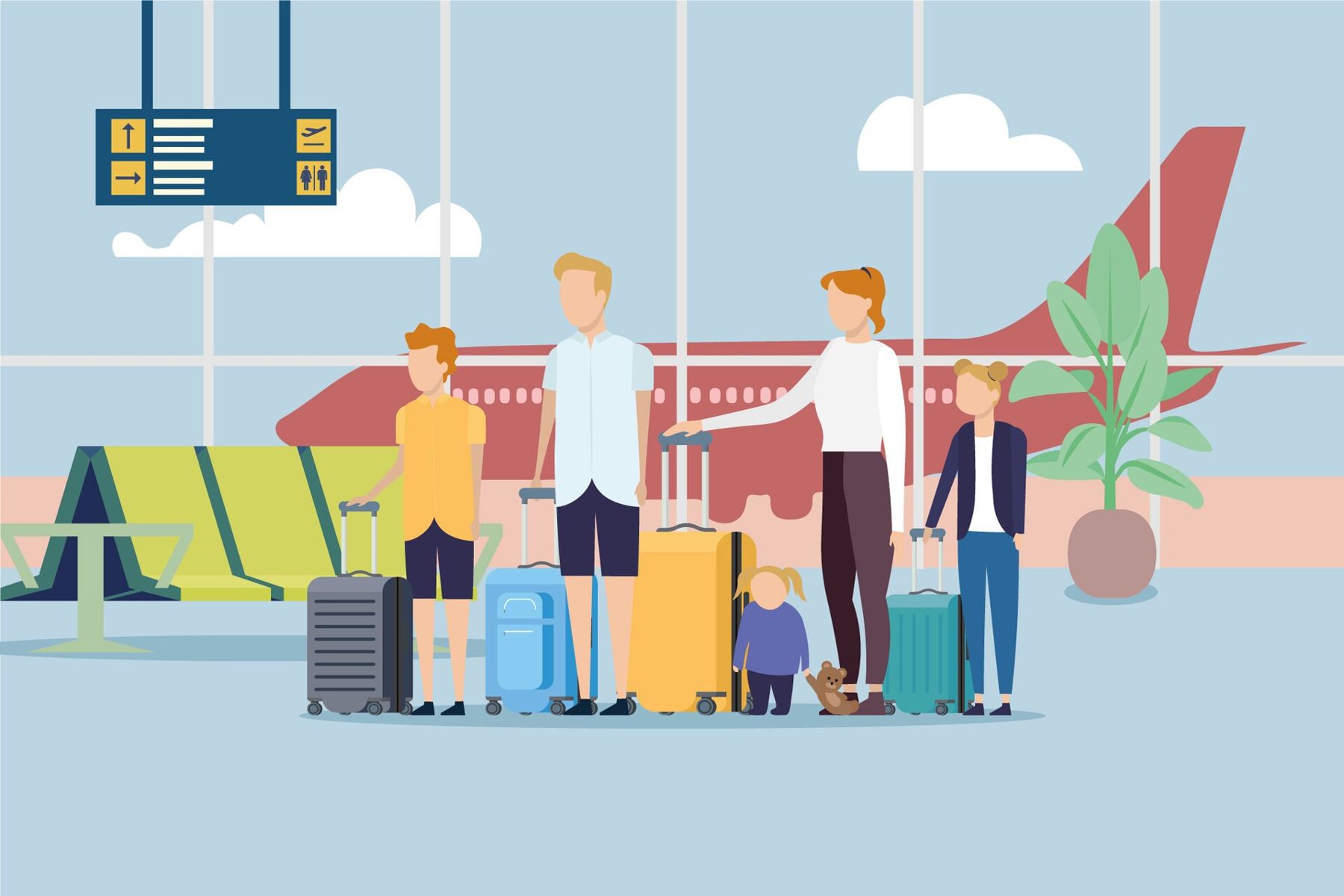
Most airports allow breast milk, formula, baby food and water for a baby in more than the usual limit for liquids, in reasonable amounts for the journey. The rules are set by each country's security authority, so read the current guidance for every airport you will pass through, including the one you fly home from.
Keep all of it together in one bag that comes out of your cabin bag easily, and tell the officers at the start that you are carrying it. They may test it or ask you to open a container. Ice packs to keep milk cool are usually allowed too. Leave plenty of time: security with a baby is slower even when nothing goes wrong.
A stroller usually goes through the scanner or is checked by hand, so be ready to lift the baby out and fold it. A carrier lets you keep the baby close while you do all of this.
Feeding on take-off and landing
Pressure changes in the cabin can hurt small ears, most of all on the way down. Swallowing helps, so many families feed a baby during take-off and especially during the descent, with breast, bottle or a dummy. The descent starts well before landing, often half an hour out, so watch for the seat-belt sign and start then rather than at touchdown.
A baby who is asleep at landing will often stay asleep. If your baby has a cold or an ear infection near the date of travel, ask your doctor whether flying is wise. For any medicine, even something you think of as routine, ask your doctor or pharmacist first.
 also in the binderRoad trips with three- to five-year-olds3-5
What to carry in the cabin
Pack the cabin bag as if your checked luggage will be a day late. The baby's essentials go in one small bag that fits under the seat in front, so you are not standing in the aisle searching the overhead locker.
- More nappies than the flight needs, wipes and a changing mat.
- Two full changes of clothes for the baby and a clean top for you.
- Milk or food for the flight time plus a few hours of delay.
- A light blanket or muslin, a familiar toy and a dummy if you use one.
- Bags for dirty clothes and nappies.
Plane toilets have fold-down changing tables on many aircraft but not all, and they are small. Change the baby just before you board so you start fresh.
Timing the flight around sleep
A flight at the baby's usual nap time or overnight can be the easiest choice, but only if the baby sleeps on the move. Some babies are too interested in the cabin to sleep at all. You know your baby; book around what they actually do, not what a schedule says they should do.
Board when it suits you. Early boarding gives time to settle, but it also adds time sitting in a cramped seat. With two adults, one can board early with the bags while the other walks the baby around the gate area until the last call.
Jet lag in a small body
Babies adjust to a new time zone in their own way. Some take a few days; others shift faster than their parents. Daylight is the strongest signal, so get outside in the morning light on the first days and keep the evenings dim and quiet.
Move naps and meals to local time gradually rather than all at once, and keep the bedtime routine the same as at home: the same bath, the same song, the same sleeping bag. On a long trip such as a week on Oahu, plan only short outings for the first two days and expect a night or two of wide-awake hours. The return home is often harder than the outward trip.
Choosing a first trip
A first flight is easier when the trip at the other end is gentle. A short flight to a beach, a lake or a single base with a fridge and space for a cot is a good start. Southern California works well: one park day and three beach days in Orange County keeps the walking short. So does a slow week in one place, such as Door County in summer, where most days need only a short drive.
Save long connections and busy itineraries for later. A baby who flies once with a good experience will make the next flight easier for everyone on board.